As digital assets became more popular in global financial markets, the need for reliable crypto management solutions also increased. Today, crypto wallets are an important part of the cryptocurrency ecosystem. They help users store, manage, and transfer digital assets, and also connect with trading apps, DeFi platforms, and payment systems.
Digital wallet solutions are very different from traditional financial apps, so their development process is also different. crypto wallets usually work in a decentralized and trustless environment where no central authority controls the user’s funds or system. Because of this, it is very important to design the wallet infrastructure carefully and include strong security measures.
Understanding Crypto Wallets
Instead of jumping directly into the crypto wallet development, let’s first understand crypto wallets in detail.
What is a Crypto Wallet?
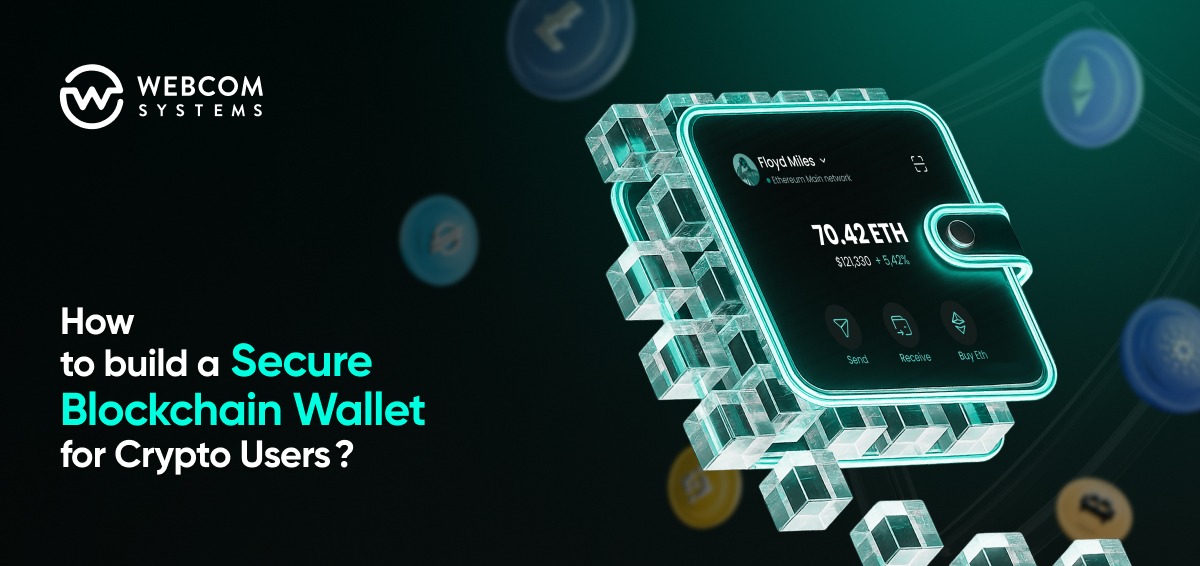
A crypto wallet is a digital wallet that allows users to store, send, receive, and manage cryptocurrencies. It helps users safely access their digital assets on the blockchain. Instead of holding physical money, a crypto wallet stores the private keys that give access to your crypto funds. With these keys, users can make transactions, check balances, and connect with crypto platforms.
crypto wallets are commonly used to manage cryptocurrencies, make payments, trade digital assets, and interact with DeFi platforms.
Types Of Crypto Wallet
These wallets are actually of different types, each with different connectivity, custody, and usage models, explained as follows:
-
Hot Wallets
crypto wallets, known as hot wallets, rely on the internet to offer real-time access to blockchain networks. They can be mobile wallet apps, browser extension wallets, or even desktop wallets. While users prefer these asset management solutions for their speedy transactions, they are more susceptible to cyberattacks.
-
Cold Wallets
Cold wallets are just like hot wallets; they store private keys, but they are not supported by the internet. This internet disconnection makes them more secure than hot wallets, yet at the price of slower transaction processing. They consist of both hardware and paper wallets.
-
Custodial Wallets
Custodial wallets, as the name implies, allow a third party (such as an exchange) to handle private keys. This approach allows for easy asset recovery in the event of an attack, but crypto users do not hold control over the private keys.
-
Non-Custodial Wallets
Non-custodial wallets provide cryptocurrency users with complete control over their private keys. As a result, it eliminates the need for a centralized authority while increasing the user’s responsibility for security, as asset recovery becomes more difficult.
Step-By-Step Secure Crypto Wallet Development Process
Building a crypto wallet requires following a structured engineering lifecycle. Here is the process you need to follow when handling the crypto wallet development process:
Planning the Wallet Architecture
First and foremost step before starting the framing architecture of the wallet is to have clarity on the type of wallet required. As previously stated, wallets are classified into several categories, each with its own framework, supported features, and security requirements.
Mostly non-custodial wallets are employed to support decentralized applications, as they remove the need to store data on servers. However, it is critical to pick the one that actually meets the list of requirements and long-term objectives.
Once the wallet type is decided on, comes the point to define core features such as multi-chain support, token compatibility, transaction history, integration with decentralized applications, and more, specific to the user base and goals for the future. Most importantly, security features such as local key storage, encryption standards, authentication methods, and recovery mechanisms are finalized during this stage.
Selecting the Technology Stack
After extensive research and multiple brainstorming sessions, the requirements are defined, and the technology for actually building the wallet is selected.
A distinct set of technologies is filtered out by thoroughly inspecting each feature required in the wallet. React Native or Flutter are popular frontend frameworks for mobile, while React or Electron are popular for web and desktop applications.
Libraries like Ethers.js, Web3.js, or Bitcoin.js are chosen for blockchain integration in order to securely handle transactions. Node.js or Go are frequently used if a backend is needed, and they don’t store private keys on the server. Finally, this step wraps up by selecting security infrastructures like Android Keystore and iOS Keychain, which complement strong encryption techniques like AES-256 and safe key derivation tools like Argon2 or PBKDF2.
Designing a Secure Wallet Architecture
The next phase is designing the system architecture. Solution designers develop a technical architecture that incorporates a user interface layer for mobile, web, and desktop applications. Moreover, this architecture will also define the wallet core components, including key management, hierarchical deterministic (HD) address derivation, multiple security layers incorporating different technologies, and a blockchain communication layer sorted based on your commercial logic and transaction needs.
Creating a User-Friendly Interface
As important as it is for the wallet to be safe, it also needs to be well-designed so that users can transfer cryptocurrencies with ease. Additionally, a great design helps with improving security by smoothly guiding users to handle their financial assets and avoid mistakes.
Now, what makes a wallet design actually best is clarity, simple navigation, easy access to key features, wallet balances, transaction history, network status, and overall user experience.
Core Wallet Development
Once the technology stack is selected and the design is ready, developers can take over the development process to provide the core wallet functionality. They will build key management systems to generate as well as manage private keys and produce seed phrases using secure cryptographic methods. Wallet addresses are then derived using hierarchical deterministic (HD) standards such as BIP-32, BIP-39, and BIP-44.
The developers would also engineer a transaction engine to handle transactions on the blockchain and give the wallet multi-currency support for various cryptocurrencies. Once this is in place, the wallet will be connected to blockchain nodes to retrieve information for updating balances and transaction history.
Implementing Security and Authentication Layers
The wallet is secured by implementing multiple authentication layers such as PIN codes, passwords, and biometric verification (Face ID or fingerprint recognition). Besides, session limits are set to reduce exposure in case of device compromise.
Root or jailbreak detection, anti-tampering mechanisms, secure code obfuscation, and other features are frequently included in wallets for extra crypto wallet security. It is advisable to use multiple layers of security to establish an incredibly secure wallet environment and shield coins from phishing and cyberattacks.
Testing And Auditing
The wallet infrastructure is tested for security and dependability rather than being launched straight away. A Quality Assurance (QA) team will conduct unit, integration, fuzz, and penetration testing procedures, one by one, to identify every single vulnerability.
If the wallet contains contract-based logic, it will also undergo special smart contract auditing. Manual and automated procedures are used to detect and fix security issues on time.
Deployment and Continuous Maintenance
After testing and necessary optimizations, the wallet is deployed across platforms such as mobile app stores, web applications, or desktop distributions. But deployment is not the end of the process. The wallet requires ongoing maintenance to detect and patch security vulnerabilities, as well as to provide necessary updates for continuous adaptation.
Build Secure Crypto Wallets With Webcom Systems
A wallet can be secure only when it is developed following the correct development practices, employing the latest tech stack, and incorporating the required security features with great expertise from the tech professionals.
Webcom Systems is a top blockchain development company that specializes in building crypto wallets for enterprises looking for digital asset management solutions to securely store, manage, transfer, and track digital assets across decentralized networks. Our team provides ready-to-deploy white-label wallet solutions as well as complete development support from ideation to the launch of custom wallets. We follow secure coding best practices and use modern technologies such as smart contracts, multi-signature authentication, and encryption-based key management to ensure the proper functionality and the highest levels of security in your wallets.
Interested in knowing more about our custom crypto wallet development services? Get in touch today!
Recommended Read: Tokenization in Crypto Exchange Development: Why It Matters